
The Feeling of Making Something, Out Among the Trees

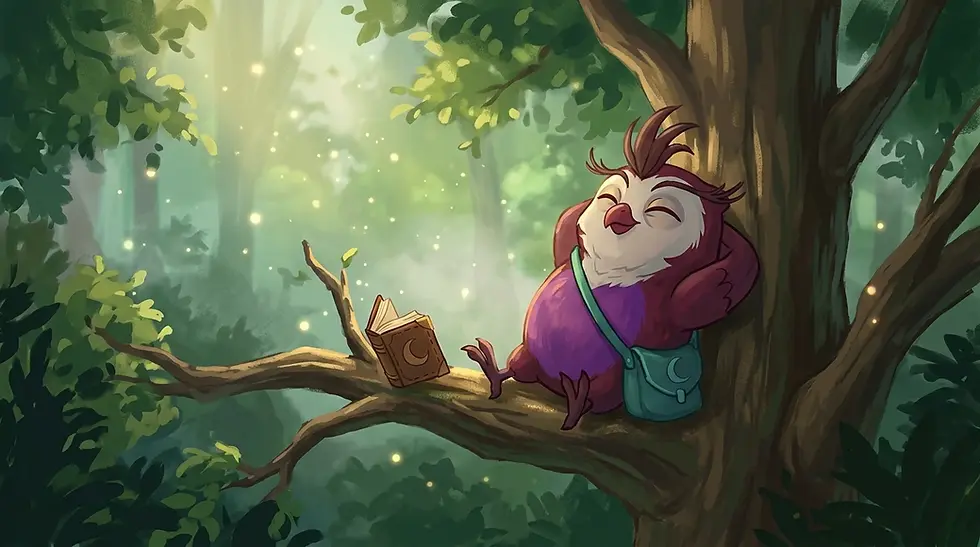
Take a notebook into a forest and something happens before you've written a word.
The air does it, partly. And the light, and the sound of things that aren't traffic. But mostly it's a shift in you — a loosening, a widening, a sense that ideas are closer to hand than they were in the room you left. You sit on a fallen log and you feel, unmistakably, more creative. As though the trees have handed you something.
Here is the strange and lovely complication. When researchers test this — when they take people into green places and then measure what they actually make — the feeling and the output don't always match. People feel markedly more creative in nature. What they produce, measured against what they'd have produced indoors, often looks about the same.
It would be easy to read that as a small disappointment. The magic, exposed as a mood. But sit with it a moment longer and it turns into something better.
Because the feeling is not nothing. The feeling is, arguably, the whole point.
Think about what actually happens on that log. The tight, braced quality of a mind under fluorescent light softens. The self-consciousness that hovers over a blank page thins out. You stop performing the act of creating and simply do it, or don't, without the usual audience in your head keeping score. Whether or not the poem that results is measurably better, the experience of arriving at it was kinder, roomier, more your own. And anyone who has spent years making things knows that how it feels to do the work is not a trivial matter. It is most of why we keep doing it at all.
We've grown used to asking what things are for. What does nature do for creativity — how much, how measurably, what's the return. It's a reasonable question and a slightly joyless one, and it quietly assumes that the only thing worth having is the finished object at the end. But the finished object is a small fraction of a creative life. The rest is the hours spent making it — the reaching, the wandering, the false starts, the long quiet stretches where nothing much is happening on the page but something is happening in you.
If a stand of trees can make those hours feel more open, less watched, more alive — that is not a lesser gift than a better poem. It might be the greater one.
There's an old suspicion that a feeling has to produce something to count. That an afternoon in the woods only earns its keep if you come home with the idea that changes everything. But the forest doesn't operate on those terms, and maybe creativity doesn't either, underneath the part of it we've learned to measure. Some of what nature offers isn't an input to be converted into output. It's just a better way to be, while you do the thing you were going to do anyway.
So take the notebook out among the trees, by all means. Not because the woods will make your work better — they might, they might not, and the measuring can be left at the treeline. Take it because of how it feels to sit there with it open on your knee: unhurried, unobserved, part of something larger and greener than the deadline you left behind.
The feeling was never a trick standing in for the real reward. The feeling was the reward, waiting under the trees the whole time for you to come and sit down.
What does making something feel like, the next time you do it somewhere green?
Further reading: The finding that nature can heighten the felt sense of creativity even when it doesn't reliably change measured creative output comes from recent research at Murdoch University. It's a gentle, honest correction to the tidier story we usually hear.


Comments